Easee Charge Up or Easee Charge Max?
The Easee Charge Up and Charge Max are the same charger inside: 22 kW on a TN grid, 12.7 kW on 3 phases on an IT grid, a Type 2 socket, a built-in RCD, Wi-Fi and 4G. The only difference that matters is the energy meter.
With all 1128 car versions in our database, the two chargers give exactly the same charging speed, on both IT and TN grids. The Easee Charge Up is NOK 4,700 cheaper on Prisjakt right now (checked 22 November 2026).
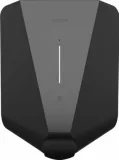
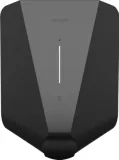
Which one should you choose?
Choose the Charge Up if it will only charge your own car at home. Easee says the Charge Up isn't MID compliant and shouldn't be used when charging is reimbursed based on measured consumption.
Choose the Charge Max if your employer reimburses your charging, or consumption must be billed or go in the accounts. It has a MID-certified meter (class B, ±1 %).
Side by side
| Feature | Easee Charge Up | Easee Charge Max |
|---|---|---|
| Price· Differs | ||
| Price· Differs | from NOK 6,499 | from NOK 11,199 |
| Max power (TN 400V, 3-phase) | ||
| Max power (TN 400V, 3-phase) | 22 kW | 22 kW |
| Max on 1 phase (TN and IT) | ||
| Max on 1 phase (TN and IT) | 7.4 kW | 7.4 kW |
| 3-phase on IT grid (230V) | ||
| 3-phase on IT grid (230V) | Yes, max 12.7 kW | Yes, max 12.7 kW |
| Max current | ||
| Max current | 32 A | 32 A |
| Cable | ||
| Cable | Type 2 socket – use your own charging cable | Type 2 socket – use your own charging cable |
| Built-in DC fault protection (6 mA) | ||
| Built-in DC fault protection (6 mA) | Yes | Yes |
| RCD (30 mA) | ||
| RCD (30 mA) | Built in | Built in |
| MID-certified energy meter· Differs | ||
| MID-certified energy meter· Differs | No | Yes |
| Internet | ||
| Internet | Wi-Fi and 4G | Wi-Fi and 4G |
| OCPP (open control standard) | ||
| OCPP (open control standard) | Yes, 1.6J | Yes, 1.6J |
| Water and impact protection | ||
| Water and impact protection | IP54, IK10 | IP54, IK10 |
| Operating temperature | ||
| Operating temperature | -30 to 40 °C | -30 to 40 °C |
| Size (H × W × D) | ||
| Size (H × W × D) | 256 × 193 × 106 mm | 256 × 193 × 106 mm |
| Made for housing co-ops | ||
| Made for housing co-ops | No | No |
From the manufacturer's datasheet. “Not stated” means the datasheet doesn't say, or it depends on the variant.
Charging speed with popular EVs
Power on a circuit that gives the charger its full power. Tap for details on the car and charger.
| Car | IT 230V | TN 400V |
|---|---|---|
| Tesla Model Y Long Range AWD (2022–2025)Easee Charge UpEasee Charge Max | 11 kW 3ph | 11 kW 3ph |
| Tesla Model 3 RWD (2021–2025)Easee Charge UpEasee Charge Max | 11 kW 3ph | 11 kW 3ph |
| Nissan LEAF 40 kWh (2018–2024)Easee Charge UpEasee Charge Max | 7 kW 1ph | 7 kW 1ph |
| Volkswagen ID.4 Pro 4MOTION (from 2022)Easee Charge UpEasee Charge Max | 7.4 kW 1ph | 11 kW 3ph |
| Volkswagen e-Golf (2017–2021)Easee Charge UpEasee Charge Max | 7.2 kW 1ph | 7.2 kW 2ph |
| Škoda Enyaq 85x (from 2023)Easee Charge UpEasee Charge Max | 7.4 kW 1ph | 11 kW 3ph |
| Audi e-tron 55 quattro (2020–2022)Easee Charge UpEasee Charge Max | 7.4 kW 1ph | 22 kW 3ph |
| Volvo EX40 Twin Motor (2024–2026)Easee Charge UpEasee Charge Max | 7.4 kW 1ph | 11 kW 3ph |